Retaining Walls & Concrete Masonry
Strong walls that hold back soil, create level spaces, and add structure to your landscape.
If your yard slopes, you've probably thought about adding usable flat space. Or maybe you need to prevent soil erosion on a hillside. That's where retaining walls come in. A properly built retaining wall holds back tons of soil pressure, creates level areas for patios or gardens, and can completely transform a sloped property into functional outdoor living space.
UptownView Chicopee Concrete builds retaining walls and concrete masonry structures throughout Chicopee. We work with poured concrete, concrete block, and stone to create walls that are both strong and attractive. Whether you need a simple garden wall or a structural wall for a major grade change, we have the expertise to design and build it correctly.
Types of Retaining Walls We Build
Different situations call for different wall types. Here are the options and when each makes sense.
Concrete Block Walls
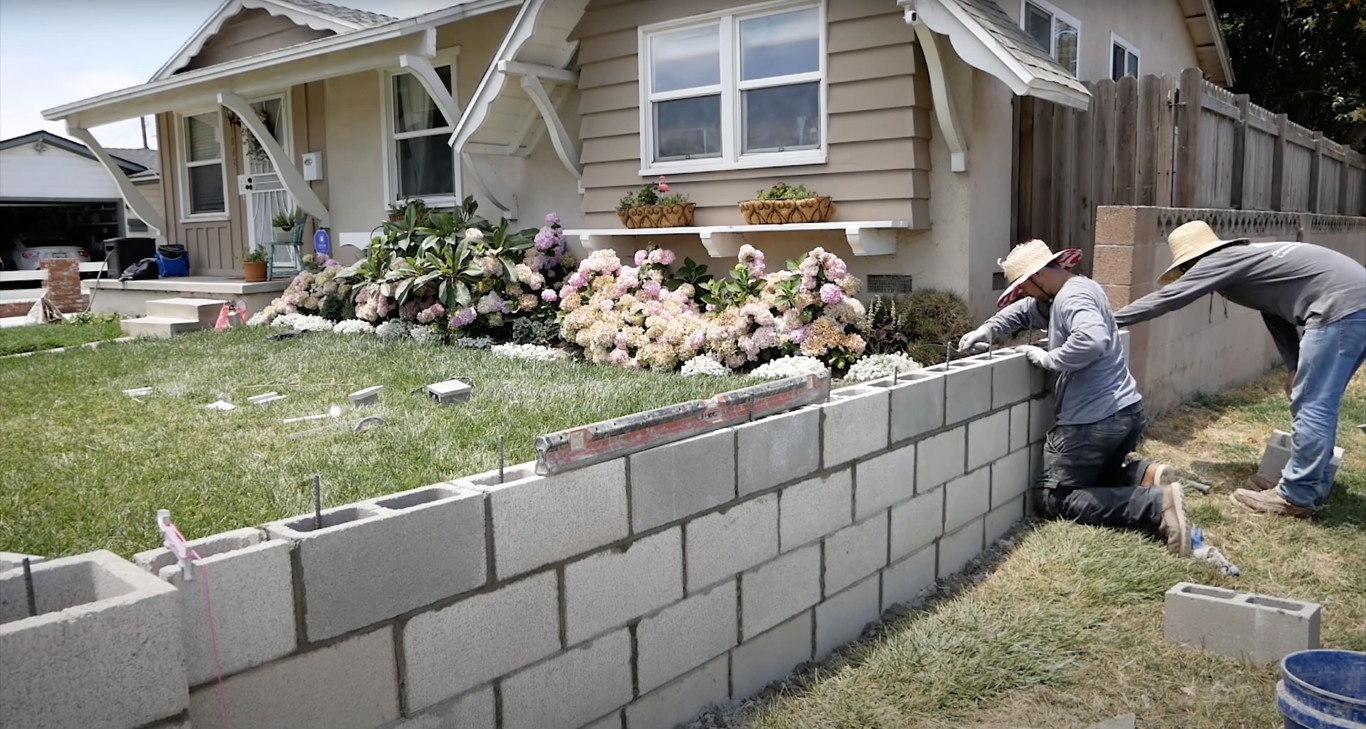
Concrete masonry blocks (CMUs) are versatile and cost-effective for walls up to 4-6 feet tall. We build the wall with interlocking blocks, filling the cores with concrete and rebar for strength. Block walls can be left with a natural gray finish, painted, stuccoed, or faced with stone veneer for a more decorative look. They're great for residential applications and work well when you need a wall built quickly.
Poured Concrete Walls
For taller walls or heavy-duty applications, poured concrete is the strongest option. We excavate for a footer, build forms, place reinforcement, and pour concrete to create a monolithic wall. Poured walls can handle more soil pressure than block walls and work for walls up to 8-10 feet or taller. They're commonly used for basement walls, commercial applications, or anywhere maximum strength is needed.
Segmental Retaining Wall Blocks
These are decorative interlocking blocks specifically designed for retaining walls. They come in various colors and textures to match your landscape design. They're engineered to work together as a system with built-in setback that makes them stable. We install them on a gravel base with proper backfill and drainage. These work well for residential walls up to 3-4 feet and create an attractive finished appearance without additional facing.
Stone-Faced Walls
For a natural look, we can build concrete or block walls and face them with natural stone or manufactured stone veneer. This gives you the structural strength of concrete with the aesthetic appeal of stone. It's more expensive than basic block or concrete but creates a high-end finished appearance that complements traditional landscapes.
Why Retaining Walls Need Expert Construction
A retaining wall is fighting constant pressure from the soil behind it. If it's not built right, it will lean, crack, or fail completely. Here's what proper construction involves.
- •Proper Footer: The wall needs a solid base below the frost line. We excavate and pour a concrete footer that's wide enough to support the wall and resist sliding.
- •Adequate Drainage: Water building up behind a wall creates enormous pressure. We install drainage systems (perforated pipe, gravel backfill, weep holes) to channel water away.
- •Proper Reinforcement: Taller walls need rebar or geogrid reinforcement to handle the load. We follow engineering specifications for reinforcement placement.
- •Correct Backfill: The material behind the wall matters. We use free-draining gravel next to the wall and compact backfill in layers to prevent settling.
- •Appropriate Height and Design: Walls over 4 feet tall often require engineering. We know when professional design is needed and work with engineers as required.
Poorly built retaining walls are expensive to fix because you often have to tear them down and start over. We build them right the first time, following proven construction methods and local building codes.
Common Uses for Retaining Walls
Retaining walls solve specific problems and create opportunities in your landscape. Here are typical applications we see.
Creating Level Spaces: If your yard slopes toward your house, a retaining wall can create a level patio area. If it slopes away, a wall can give you a level lawn area. This is one of the most common uses for residential retaining walls.
Erosion Control: Steep slopes can wash away in heavy rain. A series of terraced retaining walls holds the soil in place and prevents erosion. This is especially important if erosion is threatening your foundation or driveway.
Driveway Support: If your driveway cuts into a hillside, you might need walls on one or both sides to hold back the soil. These walls need to be strong enough to handle vehicle loads on the driveway and soil pressure from behind.
Raised Planting Beds: Shorter decorative walls (1-3 feet) can create raised garden beds, define landscape areas, or provide seating edges. These don't require the same engineering as tall structural walls but still need proper construction.
Commercial Grading: Businesses often need retaining walls for parking lot grading, loading dock access, or site development on sloped properties. These commercial applications typically require engineer-designed walls.